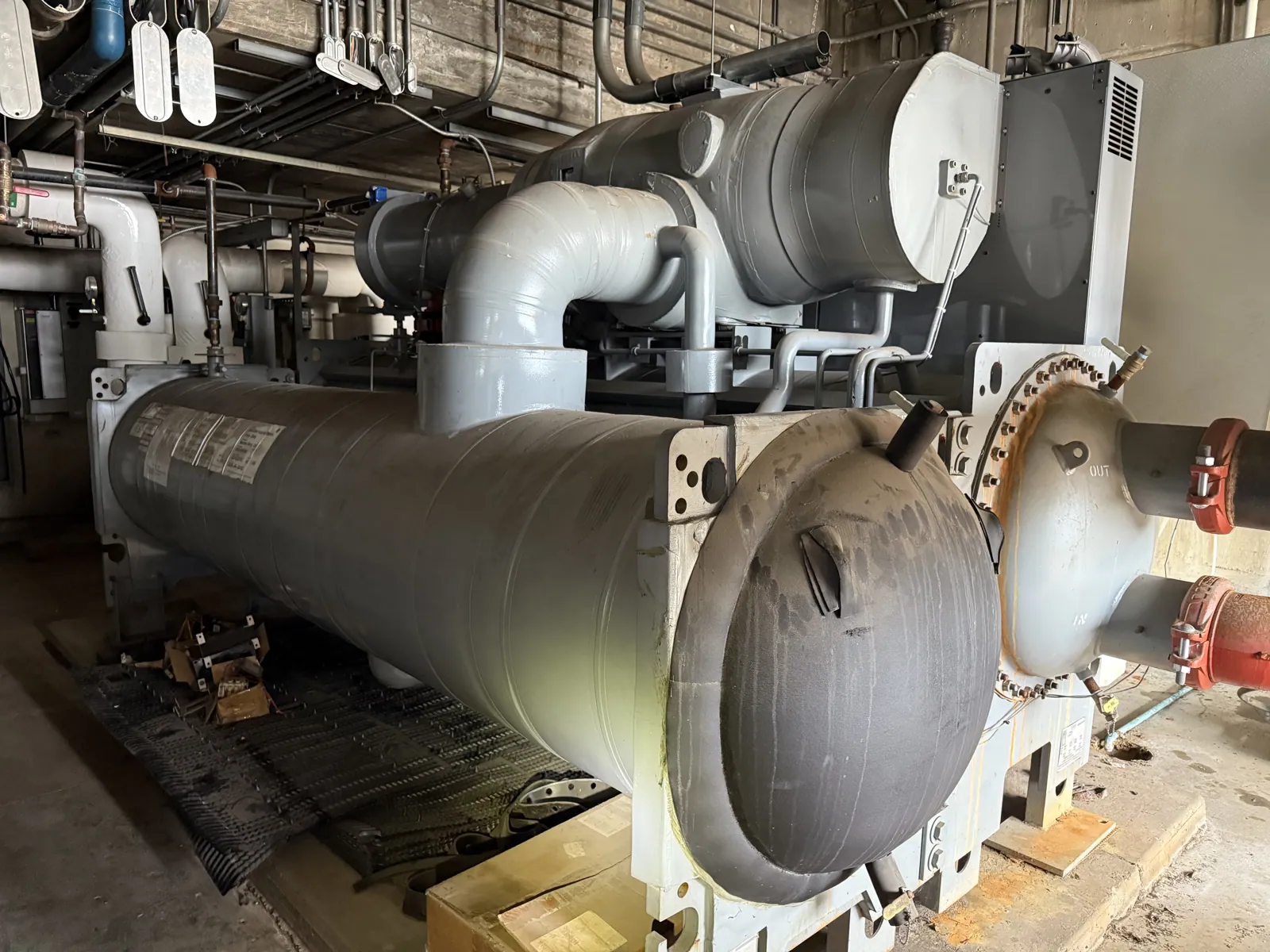
Sell a Surplus Air-Cooled Chiller in Georgetown, SC
We buy used air-cooled chiller equipment in Georgetown and handle the agreed disconnect, rigging, and freight.
We buy chillers. We don’t sell them.
Your chiller.
Our logistics.
Have a surplus or decommissioned chiller? We’re the buyer—here to make moving it straightforward.
From a single unit to equipment from a larger facility, tell us what you have. We buy industrial and commercial chillers across South Carolina and coordinate the work to get them moved.
See how it works
All types & sizes
Air-cooled or water-cooled, centrifugal, screw or scroll. Tell us what you have.
We handle the logistics
We coordinate rigging, refrigerant recovery, loading and freight for the equipment we buy.
Made for sellers
Send the details and nameplate photos to start a conversation about your chiller.
Three steps.
One less chiller.
- 01
Send the details
Share what you know, along with photos of the unit and nameplate.
- 02
Get a quote
We’ll review your equipment and discuss an offer with you.
- 03
Leave the logistics to us
We coordinate removal and freight for the chillers we purchase.
Sell a Surplus Air-Cooled Chiller in Georgetown, SC
If you have an inactive air-cooled chiller in Georgetown, South Carolina, uncertain service history does not prevent you from requesting an offer. South Carolina Chiller Buyers purchases used chillers directly; we do not sell replacement equipment. We consider air-cooled units across all tonnages, including machines below 20 tons. Units from 20 to 2,000+ tons are also common in the market, but capacity alone does not determine whether a particular machine is a fit.
Begin with what you can confirm safely: the unit’s location, visible condition, available records, and any known operating or storage history. You do not need to start, test, repair, or prepare the chiller to ask us to review it. If its recent condition is unknown, say so rather than guessing. Clear, qualified information helps set expectations for an offer and a possible removal plan.
What Makes an Air-Cooled Chiller Different
An air-cooled chiller rejects heat through outdoor coils and fans instead of relying on a conventional cooling-tower loop. That distinction can help identify the equipment and describe what is present, but visible fans and coils do not prove that the chiller works. Dirt, weather exposure, missing panels, or apparent damage may be worth noting; only a qualified assessment can establish internal condition.
Do not confuse the unit’s cooling capacity, usually stated in tons, with its transport weight. A high-capacity machine may be difficult to move because of its dimensions, weight, configuration, or site access; a smaller unit can still present a challenging lift or haul. If a nameplate is readable from a safe position, share its details. Never open, energize, drain, vent, cut, or dismantle equipment to obtain information.
Make a Useful Field Record
For an inactive machine with an uncertain service history, a short factual record is more useful than an unsupported diagnosis. Note whether the unit is on a roof, pad, or raised frame and describe the visible surroundings. Record the fan and coil condition, the compressor count where visible, and any labels or documents already available. If records are missing, simply state that they are unavailable.
Photographs can clarify both the equipment and the removal setting. Take them from safe, authorized locations and include surrounding clearance, access gates, overhead obstructions, and the route toward a potential truck position. A rooftop or elevated installation may require a lift plan and a protected ground area. At grade, the path from the chiller to a truck still matters: a narrow turn, limited clearance, or obstruction could affect the handling plan.
Share the Details That Shape the Review
When you request an offer, explain what is known and separate it from what remains uncertain. For example, if a facility has shut down the chiller and its operating history cannot be located, describe the shutdown as known and the past performance as unknown. If visible fans appear damaged, report the observation without claiming a specific mechanical failure. These distinctions keep the review grounded in facts.
- Approximate capacity or readable nameplate information, if safely available.
- Visible fan, coil, and compressor details, plus known service or storage history.
- Mounting location, access route, clearances, gates, and overhead obstacles.
- Known refrigerant information and any relevant site access limits.
We consider all brands and all refrigerants. Refrigerant is not the same as process fluid: the refrigerant circulates within the chiller’s refrigeration circuit, while process fluid—often water or another cooling medium—serves the connected load. You do not need to handle either fluid or open the machine to request an offer. If the refrigerant type is unknown, report that rather than trying to identify it by intervention.
Plan Around Access, Not Just Equipment Size
Removal arrangements depend on the chiller, the installation, site conditions, and the purchase agreement. A rooftop unit might need a coordinated lift and a suitable area below; a pad-mounted unit might have a straightforward route or one complicated by restricted clearance. These are conditional examples, not assurances about any particular Georgetown property. Photos and accurate access notes help us discuss what may be needed.
After an agreed purchase, South Carolina Chiller Buyers handles disconnects, necessary refrigerant recovery through appropriately qualified personnel, crane and rigging, loading, hauling, and freight. Freight is covered. The authorized owner or site representative must still give permission and coordinate access. Do not arrange shipment or hire a separate removal crew on our behalf.
Offer and Removal Timing
Payment is upfront for an agreed purchase. The offer and removal schedule depend on the equipment and the agreement, so neither a particular price nor a specific date can be promised before the details are reviewed. A machine with incomplete records can still be considered; its unknown condition and the practical demands of access may affect the assessment and schedule.
If you are responsible for surplus equipment in Georgetown, provide the best safe description you can and identify uncertainties plainly. There is no need to make the chiller operational or ready for transport before requesting an offer. Once the details are reviewed and terms are agreed, the buyer and authorized site representative can coordinate access and removal.
Ready to move
your chiller?
Tell us what you know. If you’re unsure of a detail, leave it blank. Nameplate photos are a great place to start.

Request a quote.
Fill out what you can and we’ll be in touch.