Sell a Surplus Air-Cooled Chiller in Allendale, SC
We buy used air-cooled chiller equipment in Allendale and handle the agreed disconnect, rigging, and freight.
We buy chillers. We don’t sell them.
Your chiller.
Our logistics.
Have a surplus or decommissioned chiller? We’re the buyer—here to make moving it straightforward.
From a single unit to equipment from a larger facility, tell us what you have. We buy industrial and commercial chillers across South Carolina and coordinate the work to get them moved.
See how it works
All types & sizes
Air-cooled or water-cooled, centrifugal, screw or scroll. Tell us what you have.
We handle the logistics
We coordinate rigging, refrigerant recovery, loading and freight for the equipment we buy.
Made for sellers
Send the details and nameplate photos to start a conversation about your chiller.
Three steps.
One less chiller.
- 01
Send the details
Share what you know, along with photos of the unit and nameplate.
- 02
Get a quote
We’ll review your equipment and discuss an offer with you.
- 03
Leave the logistics to us
We coordinate removal and freight for the chillers we purchase.
Sell a Surplus Air-Cooled Chiller in Allendale, SC
If your facility has taken an air-cooled chiller out of service, or no longer needs a spare unit, South Carolina Chiller Buyers may consider buying it. We are the direct buyer, not a seller of replacement equipment. We consider surplus air-cooled chillers in Allendale, South Carolina, across brands, refrigerants and capacities—including units below 20 tons. Equipment from 20 to 2,000 tons and above is also within the range we commonly review.
Several similar chillers can be difficult to distinguish when an equipment list, control-room label and nameplate do not match. Identify each unit separately before requesting an offer. A simple, accurate record helps connect photographs and condition notes to the right machine, without requiring anyone to start or test it.
Identify each chiller, not just the equipment group
Give each unit a temporary reference, such as “Chiller A” or “north pad unit,” and use that same reference in its photos and notes. Record the manufacturer, model, serial number and nominal capacity from the nameplate if it is safely visible. If a label is obscured or unreadable, say so rather than guessing. For a group of similar machines, note differences in location, apparent size, configuration or visible tags.
Capacity and transport weight are different details. Tonnage describes cooling capacity; it does not establish how much a machine weighs or what lifting equipment its removal requires. Weight information, if available from existing records or markings, can help with planning, but the buyer will assess handling needs for the particular unit and site.
What to document on an air-cooled unit
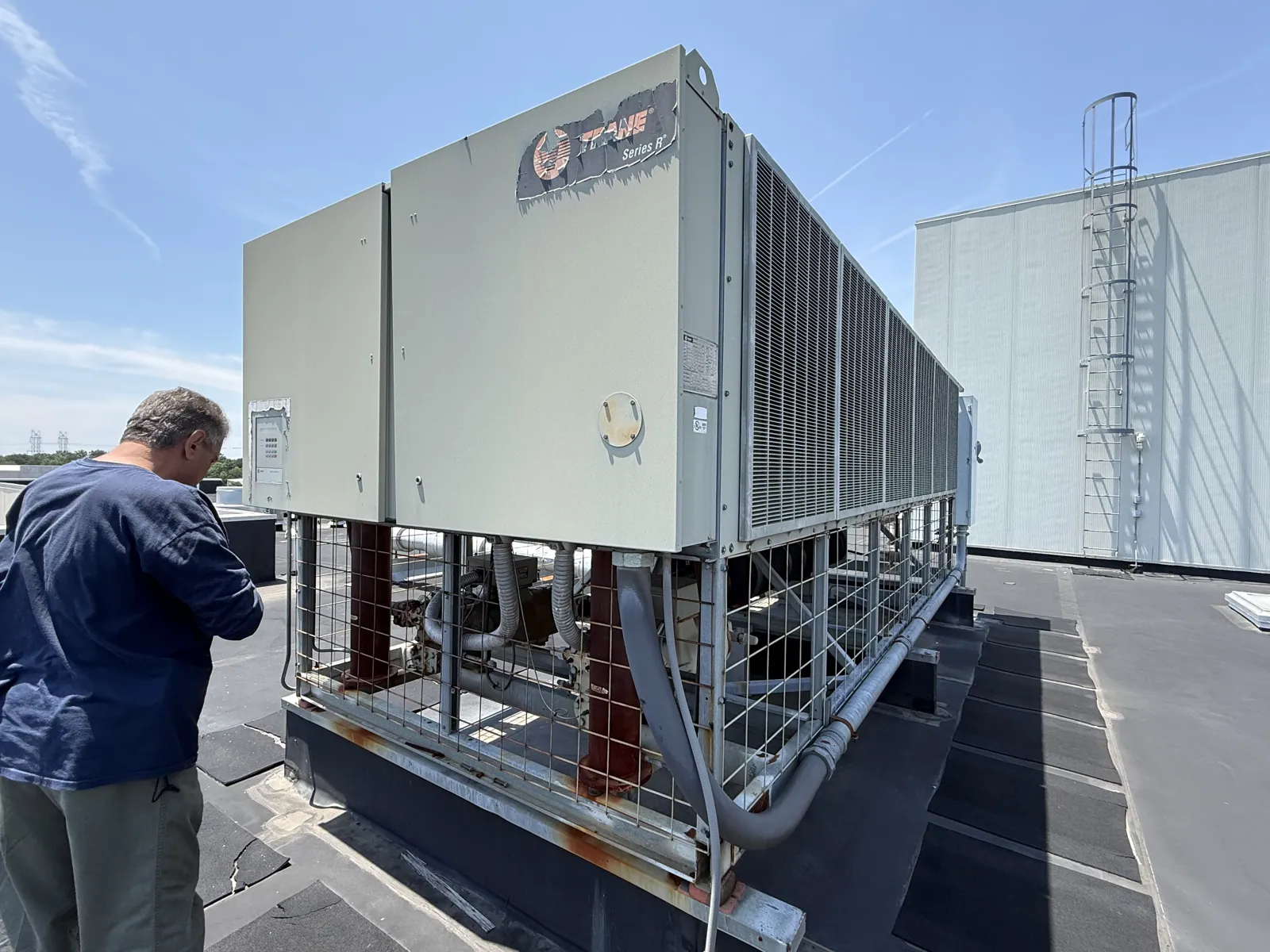
Air-cooled equipment rejects heat through outdoor coils and fans rather than relying on a conventional cooling-tower loop. For each chiller, note the visible condition of its fans and coils, the compressor count where visible, and whether it sits on a roof, pad or raised frame. Describe obvious external damage or missing components without opening panels or attempting a closer inspection that would require access to hazardous areas.
Photos can show the full unit, its nameplate, the fan-and-coil sections and the surrounding access route. Take pictures only from safe, permitted locations. Do not energize, open, drain, vent, cut or dismantle the chiller to gather information. Sellers do not need to test, start, repair or prepare equipment to request an offer.
Show the route out, not only the machine
Removal planning depends on both the chiller and its location. A rooftop or elevated unit may call for a lift plan and a protected ground area. At grade, the path from the machine to a truck still matters. Share clear views of nearby gates, turning space, overhead obstructions and other constraints that could affect access. Where several chillers are close together, identify which unit is being discussed and show enough surroundings to distinguish its route from the others.
These details support an initial review; they do not establish a final lifting method or removal date. If access is restricted, explain the limitation and identify the authorized site representative who can coordinate entry. Do not arrange your own shipment or hire a carrier for the chiller.
Cooling circuit and process fluid are not the same thing
A chiller’s refrigerant belongs to its refrigeration circuit. Process fluid, such as water or another fluid cooled by the machine, is a separate matter. Describing the refrigerant as accurately as you can—using existing records or visible equipment labels—helps the buyer assess the unit. Do not vent refrigerant or open the circuit. After an agreed purchase, the buyer handles necessary refrigerant recovery through appropriately qualified personnel.
Air-cooled design does not mean there are no site connections or removal considerations. The buyer will review the individual machine and access conditions rather than assume every unit in a group is identical.
How the purchase and removal work
- Provide the unit’s identifying details, visible condition and safe-access photos.
- Review an offer and removal schedule based on the equipment and agreed terms.
- After an agreed purchase, the buyer handles disconnects, required refrigerant recovery, crane and rigging, loading, hauling and freight; freight is covered.
Payment is upfront. The authorized owner or site representative must still grant permission and coordinate access. Price and schedule depend on the particular chiller, its condition, site constraints and the agreement; neither can be promised before that review.
When a surplus unit is worth reviewing
For example, a facility might retire one chiller while keeping several similar machines in service, or discover that a spare unit no longer fits its plans. In either case, identify the surplus machine individually rather than describing only the group. If records are incomplete, share what is known and mark unknown details clearly. South Carolina Chiller Buyers can consider all brands and refrigerants, with no requirement that the unit be operating or repaired before you request an offer.
Ready to move
your chiller?
Tell us what you know. If you’re unsure of a detail, leave it blank. Nameplate photos are a great place to start.

Request a quote.
Fill out what you can and we’ll be in touch.