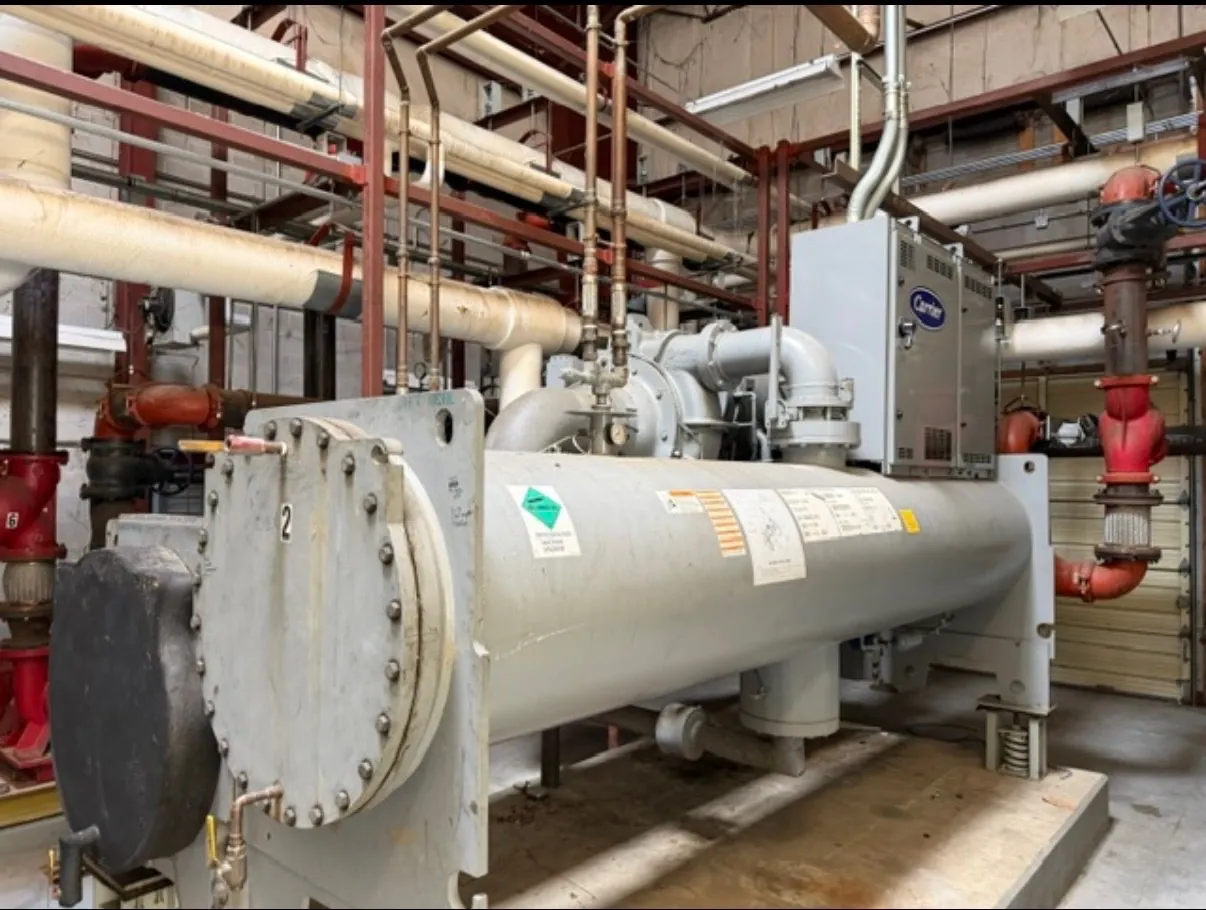
Sell a Used McQuay Chiller
We buy used and surplus McQuay chillers in South Carolina, with buyer-managed removal and freight.
We buy chillers. We don’t sell them.
Your chiller.
Our logistics.
Have a surplus or decommissioned chiller? We’re the buyer—here to make moving it straightforward.
From a single unit to equipment from a larger facility, tell us what you have. We buy industrial and commercial chillers across South Carolina and coordinate the work to get them moved.
See how it works
All types & sizes
Air-cooled or water-cooled, centrifugal, screw or scroll. Tell us what you have.
We handle the logistics
We coordinate rigging, refrigerant recovery, loading and freight for the equipment we buy.
Made for sellers
Send the details and nameplate photos to start a conversation about your chiller.
Three steps.
One less chiller.
- 01
Send the details
Share what you know, along with photos of the unit and nameplate.
- 02
Get a quote
We’ll review your equipment and discuss an offer with you.
- 03
Leave the logistics to us
We coordinate removal and freight for the chillers we purchase.
Sell a Used McQuay Chiller in South Carolina
South Carolina Chiller Buyers purchases used McQuay chillers directly from owners and authorized site representatives. We are a buyer, not a seller of replacement equipment. If your facility is retiring a McQuay unit while another chiller or a shared system must stay in service, you can request an offer without first proving that the unit runs or arranging its removal.
McQuay is a legacy chiller brand, and some equipment may also appear in Daikin documentation. Names in drawings, maintenance files, and equipment labels may not match. Send a clear photo of the actual nameplate, even if the records identify another company. That gives us a useful starting point for identifying the unit and assessing its sale.
Identify the Chiller Before Judging Its Value
Age alone does not establish a McQuay chiller’s compressor type, refrigerant, capacity, or present condition. Models can differ, and equipment may have been modified during its working life. If the unit has been retrofitted, has a missing component, or has incomplete records, state what you know and share the available paperwork. You do not need to demonstrate performance or fill gaps by guessing.
We consider chillers of all tonnages, including units below 20 tons; 20 to 2,000+ tons is a common range. We also consider all brands and refrigerants. A small McQuay unit is not automatically outside the scope of a sale, and an unfamiliar refrigerant does not by itself rule out an offer.
Plan Around Equipment That Must Remain Active
When another chiller or shared system needs to continue operating, the sale discussion should distinguish the equipment being sold from the equipment staying in place. Identify the McQuay unit clearly and explain any access constraints, shared connections, or scheduling limits that the authorized site representative already knows. Do not disconnect or alter anything to make the unit easier to assess.
For example, if a facility expects one chiller to remain available during a transition, the representative can describe that requirement when requesting an offer and discuss removal timing after the purchase terms are agreed. The removal schedule depends on the equipment and agreement, so it should be coordinated rather than assumed. This approach helps keep the sale conversation separate from decisions about operating the remaining system.
Capacity Is Not the Same as Transport Weight
Chiller capacity, usually described in tons, indicates cooling capability; it does not tell a buyer how heavy the equipment is or how it can be moved. Transport planning depends on the actual unit and site conditions, including access and rigging needs. A nameplate photo and any available equipment records can help identify the chiller, while the site representative can explain practical access limits.
Likewise, refrigerant and process fluid are different things. Refrigerant is part of the chiller’s cooling circuit; process fluid may circulate through the system the chiller serves. Records can help clarify what is present, but sellers should not open, drain, vent, cut, dismantle, or energize equipment to answer questions. If information is missing, say so.
Request an Offer Without Preparing the Unit
You do not need to test, start, repair, or prepare your McQuay chiller to request an offer. Share the label photo, known capacity or model details, any available records, and important facts such as a retrofit or missing component. Be clear about what is confirmed and what is uncertain; a sales request is not a performance certification.
Payment is upfront under the agreed purchase. The offer and removal schedule depend on the equipment and the terms accepted by both sides, so neither should be treated as fixed before review and agreement.
Removal Responsibilities After Agreement
After an agreed purchase, South Carolina Chiller Buyers handles the removal logistics: disconnects, necessary refrigerant recovery through appropriately qualified personnel, crane and rigging, loading, hauling, and freight. Freight is covered. The seller does not need to hire a carrier or ship the chiller.
The authorized owner or site representative still needs to give permission and coordinate access. That person can explain site rules and the relationship between the chiller being sold and any equipment that must remain active. Do not attempt to make the unit ready for transport yourself; removal work is handled as part of the agreed arrangement.
Useful Details to Include
- A photo of the actual McQuay label, even when documents use a Daikin or other company name.
- Known capacity, model information, or records, without estimating details you cannot verify.
- Any retrofit, missing component, access limitation, or requirement to keep another chiller or shared system active.
These details help focus the review on the specific used McQuay chiller in South Carolina and the conditions that may affect its purchase and removal. If some information is unavailable, provide what you have and let the assessment proceed without unsafe inspection or unnecessary preparation.
Ready to move
your chiller?
Tell us what you know. If you’re unsure of a detail, leave it blank. Nameplate photos are a great place to start.

Request a quote.
Fill out what you can and we’ll be in touch.