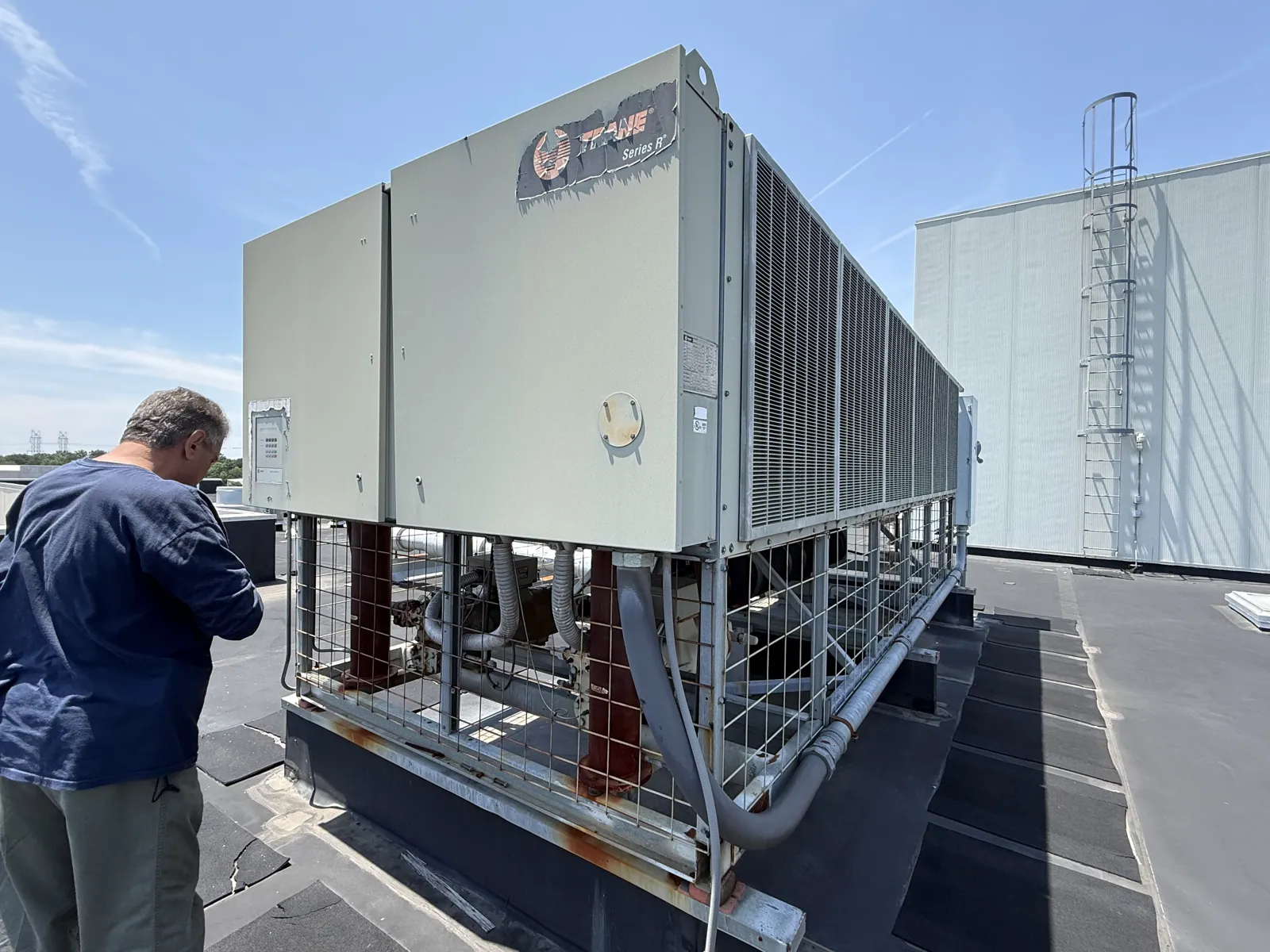
Sell a Surplus Centrifugal Chiller in Sumter, SC
We buy used centrifugal chiller equipment in Sumter and handle the agreed disconnect, rigging, and freight.
We buy chillers. We don’t sell them.
Your chiller.
Our logistics.
Have a surplus or decommissioned chiller? We’re the buyer—here to make moving it straightforward.
From a single unit to equipment from a larger facility, tell us what you have. We buy industrial and commercial chillers across South Carolina and coordinate the work to get them moved.
See how it works
All types & sizes
Air-cooled or water-cooled, centrifugal, screw or scroll. Tell us what you have.
We handle the logistics
We coordinate rigging, refrigerant recovery, loading and freight for the equipment we buy.
Made for sellers
Send the details and nameplate photos to start a conversation about your chiller.
Three steps.
One less chiller.
- 01
Send the details
Share what you know, along with photos of the unit and nameplate.
- 02
Get a quote
We’ll review your equipment and discuss an offer with you.
- 03
Leave the logistics to us
We coordinate removal and freight for the chillers we purchase.
Sell a Surplus Centrifugal Chiller in Sumter, SC
South Carolina Chiller Buyers purchases surplus centrifugal chillers in Sumter, South Carolina. If a machine is inactive and its service history is incomplete, you can still request an offer without putting it back into operation. We buy chillers rather than sell replacement equipment, and we consider all tonnages, brands, and refrigerants.
A centrifugal chiller uses an impeller-driven compressor, but similar-looking packages may have very different configurations and condition. For a useful first assessment, identify the unit carefully and describe what is known, what is uncertain, and whether the equipment is assembled or already partly separated. You do not need to diagnose faults or make the machine operational before contacting us.
Build a reliable equipment record
Start with the complete unit model and any readable nameplate information. Record the compressor and motor arrangement, along with the manufacturer and approximate capacity if those details are available. Capacity helps describe the chiller, but it is not a measure of how much the assembled machine weighs or how difficult it will be to remove.
That distinction matters when planning a sale. A large-capacity unit may be compact relative to another package, while a lower-tonnage machine can still be heavy or awkward to move. If documentation is missing, say so rather than guessing. Photos and partial identification can still help establish what equipment is being considered.
Photograph condition without disturbing the unit
For an inactive chiller with uncertain history, exterior photographs are often more useful than an unsupported claim that it is working. Capture the shell ends, motor, starter or drive, nameplates, and any visible lifting points. Include enough surrounding space to show the package’s orientation and access route. Do not open, energize, drain, cut, or dismantle equipment to obtain information.
Also note visible damage, missing components, corrosion, or signs that the unit has been stored outdoors, if you can observe them safely. If the controls are unavailable or prior operating records cannot be found, state that plainly. South Carolina Chiller Buyers does not require sellers to test, start, repair, or prepare a chiller to request an offer.
Check the removal route early
A large assembled centrifugal package may need careful clearance measurements. Do not assume it can pass through the same opening used by a technician; access for people and access for heavy equipment are different problems. Useful observations include doorway and corridor clearances, overhead obstructions, turning space, and whether the likely route reaches an exterior loading area.
These details help frame removal planning, but the seller is not expected to arrange a crane or ship the machine. After a purchase is agreed, the buyer handles disconnects, necessary refrigerant recovery through appropriately qualified personnel, crane and rigging, loading, hauling, and freight. Freight is covered. The authorized owner or site representative must still grant permission and coordinate access.
Separate chiller refrigerant from process fluid
Industrial chillers may contain refrigerant in the refrigeration circuit and a separate process fluid, commonly water or a water-based solution, in the heat-transfer circuit. They are not interchangeable materials, and information about one does not establish the status of the other. If records identify the refrigerant, share the documented type; if not, report it as unknown rather than inferring it from the unit’s age or appearance.
Do not vent refrigerant or attempt to drain either circuit for a sale inquiry. Recovery, where necessary, is handled as part of the agreed removal by appropriately qualified personnel. When process-fluid history is uncertain, simply explain what records or observations are available.
Decide what information to send
A concise submission can help distinguish a complete centrifugal chiller from a package with missing or unidentified parts. Include the full model when legible, available capacity information, compressor and motor arrangement, known refrigerant, service-history gaps, and photographs of the areas listed above. Mention whether the unit is assembled and note access constraints you already know.
- Identify the chiller and describe uncertainty instead of guessing.
- Photograph exterior features and measure relevant route clearances where feasible.
- Confirm who can authorize access and coordinate with the site.
What to expect after an inquiry
South Carolina Chiller Buyers considers centrifugal chillers along with other chiller types, from units below 20 tons through the common 20-to-2,000-plus-ton range. An inactive machine is not automatically excluded, and neither a particular brand nor refrigerant is a reason to assume it cannot be considered. The equipment’s identity, condition, completeness, and removal circumstances all inform the review.
Payment is upfront for an agreed purchase. The offer and removal schedule depend on the equipment and the terms arranged; neither a specific price nor a particular pickup date can be promised in advance. If the unit is in Sumter and ownership or site authority is clear, provide the best available information and let the review proceed without restarting a machine whose history is unknown.
Ready to move
your chiller?
Tell us what you know. If you’re unsure of a detail, leave it blank. Nameplate photos are a great place to start.

Request a quote.
Fill out what you can and we’ll be in touch.