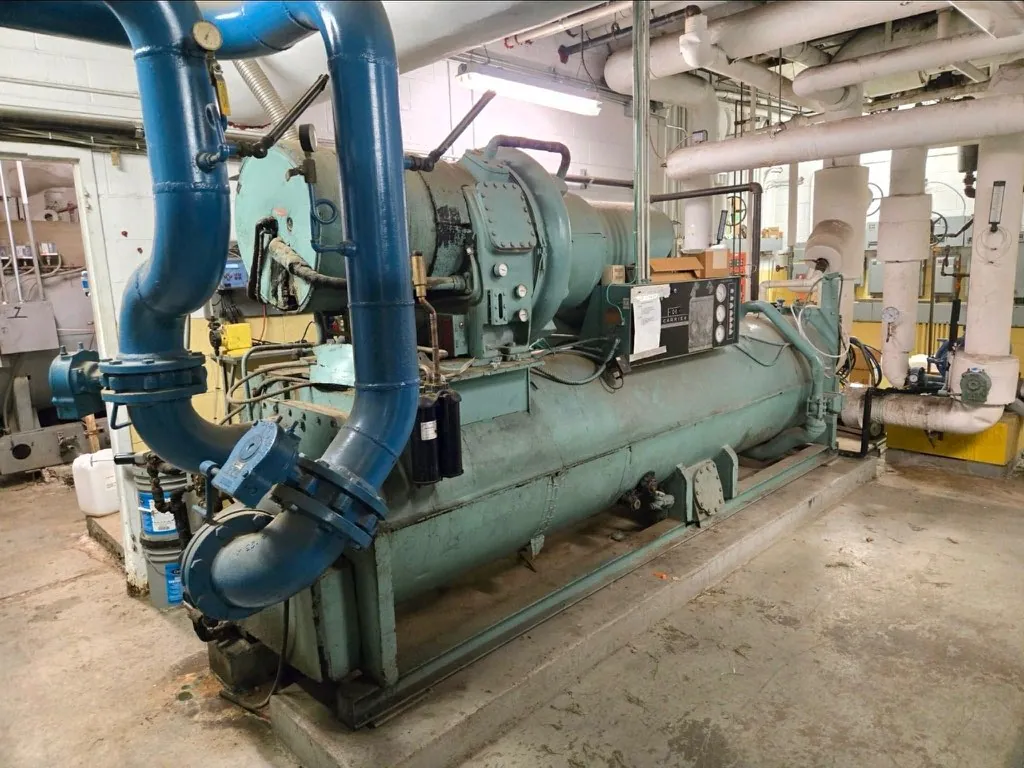
Sell a Surplus Water-Cooled Chiller in Loris, SC
We buy used water-cooled chiller equipment in Loris and handle the agreed disconnect, rigging, and freight.
We buy chillers. We don’t sell them.
Your chiller.
Our logistics.
Have a surplus or decommissioned chiller? We’re the buyer—here to make moving it straightforward.
From a single unit to equipment from a larger facility, tell us what you have. We buy industrial and commercial chillers across South Carolina and coordinate the work to get them moved.
See how it works
All types & sizes
Air-cooled or water-cooled, centrifugal, screw or scroll. Tell us what you have.
We handle the logistics
We coordinate rigging, refrigerant recovery, loading and freight for the equipment we buy.
Made for sellers
Send the details and nameplate photos to start a conversation about your chiller.
Three steps.
One less chiller.
- 01
Send the details
Share what you know, along with photos of the unit and nameplate.
- 02
Get a quote
We’ll review your equipment and discuss an offer with you.
- 03
Leave the logistics to us
We coordinate removal and freight for the chillers we purchase.
Sell a Surplus Water-Cooled Chiller in Loris, SC
If you have a water-cooled chiller in Loris that is no longer needed, a clear inventory can make the purchase discussion more useful—even when records are incomplete. South Carolina Chiller Buyers is a direct buyer of used chillers, not a seller of replacement equipment. We consider water-cooled units of all tonnages, all brands, and all refrigerants. A unit does not have to be running or fully documented for you to request an offer.
Start with what you can establish safely: the equipment’s visible identity, what systems connect to it, what may be included in the sale, and how removal access works. Do not energize, open, drain, vent, cut, or dismantle the chiller to gather details. If something is unknown, label it as unknown rather than guessing.
Separate the chiller from the surrounding system
A water-cooled chiller normally interfaces with two water circuits: a chilled-water loop and a condenser-water loop. Those connections are different from the refrigerant circuit contained within the chiller. The condenser-water loop often connects with a cooling tower, while the chilled-water loop serves the building or process. Identifying the two sets of water connections helps clarify what equipment is being considered and what must remain available to the property.
Make a preliminary list of whether the cooling tower, pumps, and associated controls are included or staying in place. If you are unsure whether a control panel or pump serves only this chiller or is shared with other equipment, note that uncertainty. A conditional example: if a tower serves multiple chillers, it may not be part of the chiller sale; if it is dedicated and surplus, you can ask whether it should be considered separately.
Build an inventory from available evidence
Look for a manufacturer’s nameplate or other readable identification from a safe, accessible position. Record the brand, model, serial number, stated capacity, and any visible refrigerant information if available. Add an approximate installation or removal timeframe only if you have a reliable basis for it. Old invoices, asset lists, or maintenance records may fill gaps, but they are not prerequisites for an initial conversation.
Capacity and transport weight answer different questions. Tonnage describes cooling capacity; it does not tell a rigger how heavy the machine is or whether it will pass through a particular exit. If the weight is not documented, say so. Photos showing the chiller as a whole, its nameplate, visible piping, and the route toward the machinery-room exit can help frame follow-up questions without requiring anyone to move the equipment.
Clarify the removal boundary
Before an agreed purchase, identify what is shared and what is intended to remain in service. The disconnection plan must distinguish the chiller from shared piping and any cooling equipment that stays in use. Useful photos include valves, insulation, pipe runs, nearby pumps or controls, and the machinery-room exit. These images can help establish the likely scope; they do not replace an agreed removal plan or authorize work on the system.
Access information matters too. Note door dimensions if already documented, stairs or tight turns, overhead restrictions, and whether the unit is at grade or on another level. Do not dismantle piping, remove insulation, or prepare the machine for pickup. The authorized owner or site representative must give permission and coordinate access, including any site-specific arrangements needed for the agreed work.
What to include when requesting an offer
- Available nameplate details, approximate tonnage, brand, and refrigerant information.
- Whether the cooling tower, pumps, and controls are included, excluded, or not yet confirmed.
- Photos of the chiller, both water-loop connection areas, shared pipework, valves, and exit route.
- Known access constraints and the name or role of the person authorized to coordinate entry.
Consider condition without preparing the unit
You do not need to test, start, repair, or otherwise prepare the chiller to request an offer. If operating condition is unknown, say so. If records mention a past issue, share the description as documented rather than attempting a new diagnosis. Do not ask staff to open equipment or handle refrigerant, process water, or other fluids to improve the inventory.
Water in a chilled-water or condenser-water circuit is not the same thing as refrigerant in the chiller’s sealed refrigeration system. The presence of either should not be inferred from a photograph or an old service note. Any necessary refrigerant recovery associated with removal is handled by appropriately qualified personnel as part of the buyer’s removal arrangements.
Offer and removal arrangements
South Carolina Chiller Buyers considers chillers below 20 tons as well as larger equipment; 20 to 2,000+ tons is a common range, not a minimum or a limit. A possible example—not a claim about any particular property in Loris—is a small surplus process chiller with no complete file. Its readable nameplate, clear photos, and a candid account of unknowns may still support a practical purchase discussion.
Payment is upfront after the purchase terms are agreed. The buyer handles disconnects, necessary refrigerant recovery through appropriately qualified personnel, crane and rigging, loading, hauling, and freight; freight is covered. The offer and removal schedule depend on the equipment and the agreement, so neither a specific price nor a particular date can be promised in advance. Your role is to provide accurate information where available and ensure the authorized representative can coordinate access.
Ready to move
your chiller?
Tell us what you know. If you’re unsure of a detail, leave it blank. Nameplate photos are a great place to start.

Request a quote.
Fill out what you can and we’ll be in touch.