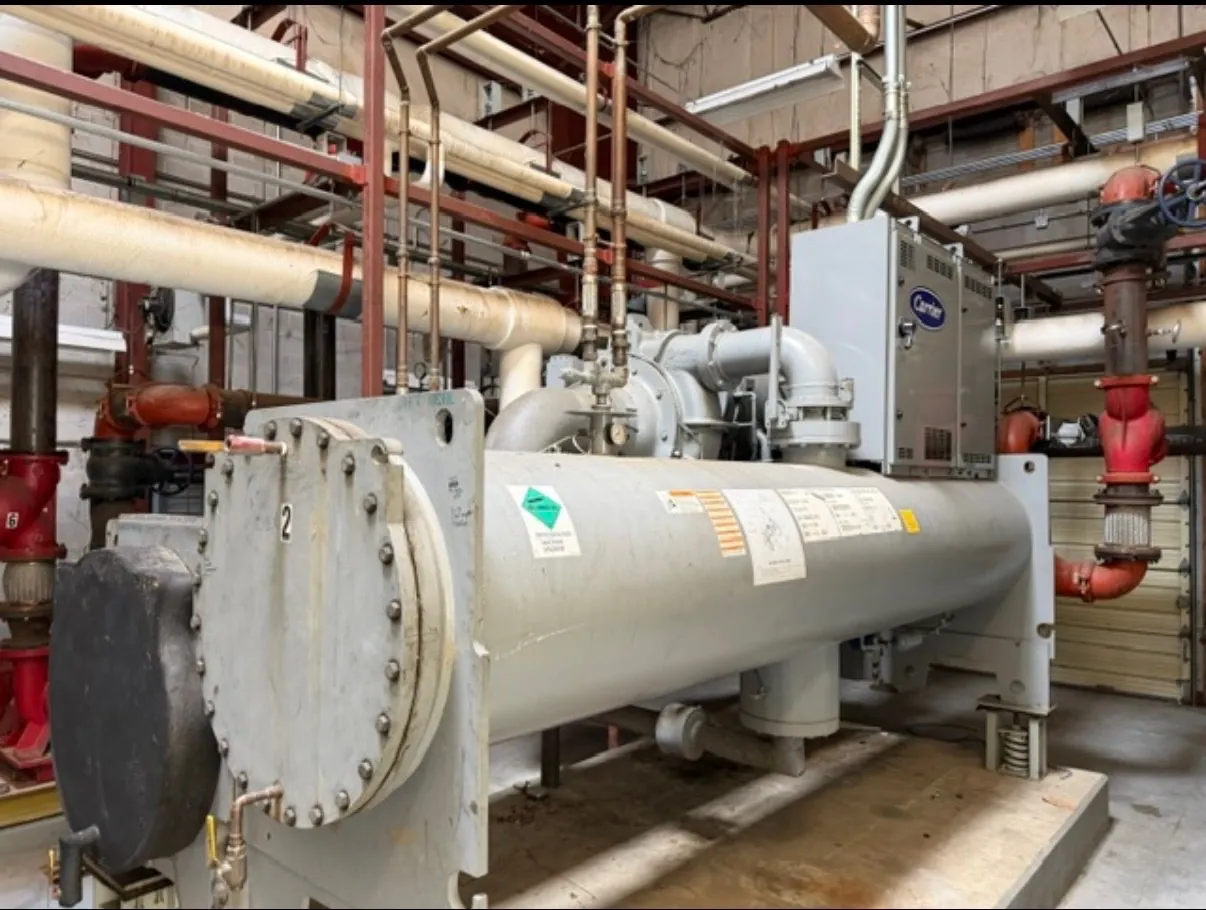
Sell a Surplus Water-Cooled Chiller in Lancaster, SC
We buy used water-cooled chiller equipment in Lancaster and handle the agreed disconnect, rigging, and freight.
We buy chillers. We don’t sell them.
Your chiller.
Our logistics.
Have a surplus or decommissioned chiller? We’re the buyer—here to make moving it straightforward.
From a single unit to equipment from a larger facility, tell us what you have. We buy industrial and commercial chillers across South Carolina and coordinate the work to get them moved.
See how it works
All types & sizes
Air-cooled or water-cooled, centrifugal, screw or scroll. Tell us what you have.
We handle the logistics
We coordinate rigging, refrigerant recovery, loading and freight for the equipment we buy.
Made for sellers
Send the details and nameplate photos to start a conversation about your chiller.
Three steps.
One less chiller.
- 01
Send the details
Share what you know, along with photos of the unit and nameplate.
- 02
Get a quote
We’ll review your equipment and discuss an offer with you.
- 03
Leave the logistics to us
We coordinate removal and freight for the chillers we purchase.
Sell a Surplus Water-Cooled Chiller in Lancaster, SC
South Carolina Chiller Buyers purchases surplus water-cooled chillers in Lancaster and throughout South Carolina. We are a direct buyer, not a seller of replacement equipment. We consider all tonnages, including units below 20 tons; 20 to 2,000+ tons is a common range. We also consider all brands and refrigerants. An older or currently inactive unit may still be worth discussing, and you do not need to test, start, repair, or prepare it to request an offer.
Start with the owner’s equipment details
The equipment owner or authorized representative can begin by sharing what is known about the chiller: manufacturer, model, approximate age, rated capacity, refrigerant, and whether it is operating, idle, or has a known issue. A clear nameplate photo and several exterior views are useful, but do not open panels or enter restricted areas to obtain them. If a detail is unavailable, say so rather than estimating; an incomplete first description is better than an unsafe inspection.
Capacity helps identify the machine, but it is not its transport weight. A chiller’s installed weight, dimensions, configuration, and the route out of the building affect handling and removal planning. If available, share equipment documents or known dimensions. Do not infer a lifting weight from tonnage alone.
Map the water circuits and what stays
A water-cooled chiller normally connects to both a chilled-water loop and a condenser-water loop. When describing your water-cooled chiller in Lancaster, identify both sets of connections and clarify whether the cooling tower, pumps, and associated controls are part of the proposed sale or remain with the property. These items are related to operation, but they are not automatically included with the chiller.
That distinction matters where piping or controls serve other equipment. If a pump or line is shared, note that rather than treating it as part of the chiller package. For example, if the tower serves several machines, the owner can identify it as excluded and ask the site contact to confirm which connections belong only to the surplus unit. This helps define the proposed purchase without assuming the whole plant is available.
Give the site contact a clear access role
The owner supplies information about ownership, equipment, included components, and the intended sale. A separate facilities or site access contact may be better positioned to explain building entry, operating restrictions, shared services, loading-area access, and the machinery-room exit. With the owner’s permission, that contact can provide access details directly or relay them through the owner. Neither role replaces the other: the authorized owner or site representative must provide permission and coordinate access.
Keep the information flow practical. First, the owner identifies the unit and what is included. Next, the access contact clarifies the removal boundary and any site constraints. If their descriptions differ—for instance, one person lists a pump as included while another says it serves equipment that remains—resolve the difference before agreeing on scope. No one needs to energize, drain, disconnect, cut, dismantle, or vent equipment to request an offer.
Photos can clarify removal boundaries
For water-cooled chiller removal, the disconnection plan must separate the chiller from shared piping and cooling equipment that will stay in service. Photos of valves, insulation, pipe runs, and the machinery-room exit can help establish that scope. Images should be taken only from safe, authorized locations; avoid moving insulation or reaching into operating areas. A simple note identifying the chiller and marking included or excluded items can prevent confusion, especially when several similar lines or machines are present.
These details inform evaluation and logistics, but they do not guarantee a particular offer or removal date. The offer and schedule depend on the equipment and the agreement reached. If access or equipment information changes, share the update so the scope can be reviewed.
What happens after an agreed purchase
Once a purchase is agreed, South Carolina Chiller Buyers handles the removal logistics: disconnects, necessary refrigerant recovery by appropriately qualified personnel, crane and rigging, loading, hauling, and freight. Freight is covered. The seller does not need to hire a carrier or ship the chiller. The site must still authorize the work and coordinate access, including any applicable entry procedures or timing constraints.
Payment is upfront. The exact arrangement and timing are confirmed as part of the agreement rather than assumed from a general description. For a Lancaster seller, a useful next step is to send the equipment details and explain who can authorize access and answer site questions. That gives the buyer a sound basis to discuss the unit, boundaries, and possible removal plan without asking the seller to prepare it.
A short information checklist
- Owner: share the make, model, known capacity, refrigerant, condition, and any available documents.
- Owner: state whether the tower, pumps, and controls are included or excluded.
- Site contact: clarify shared piping, access permissions, machinery-room exit, and loading constraints.
- Both: resolve scope differences before agreeing to a purchase or removal plan.
Ready to move
your chiller?
Tell us what you know. If you’re unsure of a detail, leave it blank. Nameplate photos are a great place to start.

Request a quote.
Fill out what you can and we’ll be in touch.