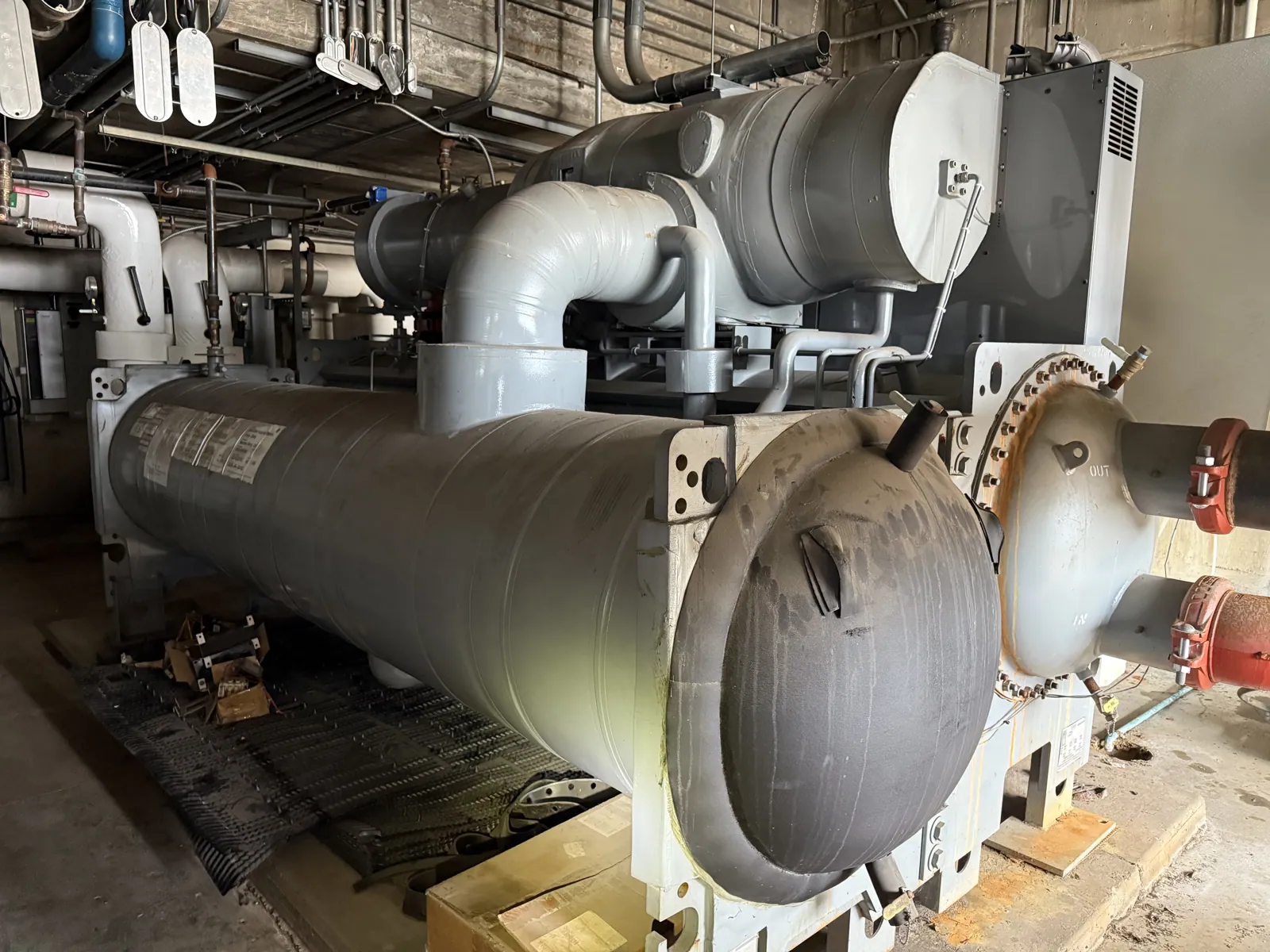
Sell a Surplus Water-Cooled Chiller in Chesterfield, SC
We buy used water-cooled chiller equipment in Chesterfield and handle the agreed disconnect, rigging, and freight.
We buy chillers. We don’t sell them.
Your chiller.
Our logistics.
Have a surplus or decommissioned chiller? We’re the buyer—here to make moving it straightforward.
From a single unit to equipment from a larger facility, tell us what you have. We buy industrial and commercial chillers across South Carolina and coordinate the work to get them moved.
See how it works
All types & sizes
Air-cooled or water-cooled, centrifugal, screw or scroll. Tell us what you have.
We handle the logistics
We coordinate rigging, refrigerant recovery, loading and freight for the equipment we buy.
Made for sellers
Send the details and nameplate photos to start a conversation about your chiller.
Three steps.
One less chiller.
- 01
Send the details
Share what you know, along with photos of the unit and nameplate.
- 02
Get a quote
We’ll review your equipment and discuss an offer with you.
- 03
Leave the logistics to us
We coordinate removal and freight for the chillers we purchase.
Sell a Surplus Water-Cooled Chiller in Chesterfield, SC
If you have a surplus water-cooled chiller in Chesterfield, South Carolina, South Carolina Chiller Buyers can consider purchasing it directly. We buy used chillers; we do not sell replacement equipment. Chillers of every tonnage, brand, and refrigerant type are considered, including units below 20 tons. A range of 20 to 2,000-plus tons is common, but capacity alone does not determine whether a unit is a fit or what an offer may be.
You do not need to test, start, repair, or prepare the chiller to request an offer. Share what you know about its condition, configuration, and access, and we can discuss the next steps. An offer and removal schedule depend on the equipment and the agreed scope, so neither a price nor a particular pickup date should be assumed in advance.
Cooling capacity is not transport weight
Nominal tons describe cooling capacity, not the chiller’s mass. A 100-ton unit, for example, cannot be assumed to weigh a particular amount from its capacity rating alone. Models with similar nominal capacity may differ in construction, dimensions, refrigerant charge, and installed components. For removal planning, documented shipping or operating weight is more useful than tonnage, although even a listed weight should be checked against the actual configuration.
If available, provide the make, model, serial number, nameplate information, and any equipment records that state weight or dimensions. Do not estimate a crane lift from the tonnage rating. If records are missing, photos and a description can still help establish what information needs to be confirmed before removal is planned.
Map both water circuits and what stays
A water-cooled chiller normally connects to two separate systems: the chilled-water loop serving the cooling load and the condenser-water loop that transfers heat, often through a cooling tower. Identify both sets of connections when describing the unit. Also clarify whether the tower, pumps, and related controls are included in the proposed sale or remain with the property. These items may be part of a larger system, but they are not automatically part of the chiller purchase.
For example, if a property will keep using its cooling tower for another chiller, the removal scope may need to exclude that tower and its shared piping. If pumps or controls serve several pieces of equipment, note that relationship rather than treating them as dedicated components. The intended sale boundary should be agreed before removal work is arranged.
Show the disconnection route before scheduling
Water-cooled chiller removal requires a plan that separates the unit from shared piping and any cooling equipment that must remain operational. Photos of valves, insulation, pipe runs, nearby pumps, and the route through the machinery-room exit can help clarify the scope. Include tight turns, doorways, overhead obstructions, and the likely path to the loading area when visible. These details help assess access; they do not replace an on-site determination where one is needed.
Do not open, drain, cut, dismantle, or otherwise alter the equipment to take pictures or prepare it for an offer. Leave connections and system components undisturbed. The authorized owner or site representative must provide permission and coordinate access for any agreed inspection or removal.
Information that helps assess a surplus unit
A concise description is often more useful than an unsupported guess about condition or weight. Useful details include whether the chiller is installed or already disconnected, whether its operating status is known, and whether the equipment is accessible for removal. If you have records, include them; if you do not, say so. Do not energize the unit to answer questions or verify its operation.
- Make, model, serial number, nominal tons, and available weight or dimension records.
- Photos of the nameplate, both water-loop connections, surrounding equipment, and the machinery-room exit.
- A clear note on whether the cooling tower, pumps, controls, and shared piping are included or retained.
- Known access limits, site contact details, and confirmation that the owner or authorized representative can approve access.
What happens after an agreed purchase
After a purchase is agreed, South Carolina Chiller Buyers handles the removal logistics in the agreed scope: disconnects, necessary refrigerant recovery through appropriately qualified personnel, crane and rigging, loading, hauling, and freight. Freight is covered. The seller is not expected to hire a carrier or ship the chiller. The site representative still needs to authorize the work and coordinate access, including any site-specific arrangements needed to reach the equipment.
Refrigerant and process water are different materials with different roles: refrigerant circulates within the chiller’s refrigeration circuit, while water moves through the chilled-water and condenser-water loops. Do not vent refrigerant or attempt to drain either system. Required handling is addressed through the removal plan and appropriately qualified personnel.
Decide whether to request an offer
Consider an offer if the chiller is surplus, scheduled for replacement, or no longer needed for the property’s intended use. A unit’s age, unknown operating condition, small capacity, or lack of complete records does not by itself prevent an inquiry. If the tower or piping will remain in service, identify that constraint early so the proposed removal can be evaluated around the equipment that stays.
For a water-cooled chiller in Chesterfield, provide the information you have and describe the site boundaries clearly. The buyer can then review the unit and discuss an offer and removal schedule based on its configuration, access, and the terms agreed with the authorized representative.
Ready to move
your chiller?
Tell us what you know. If you’re unsure of a detail, leave it blank. Nameplate photos are a great place to start.

Request a quote.
Fill out what you can and we’ll be in touch.