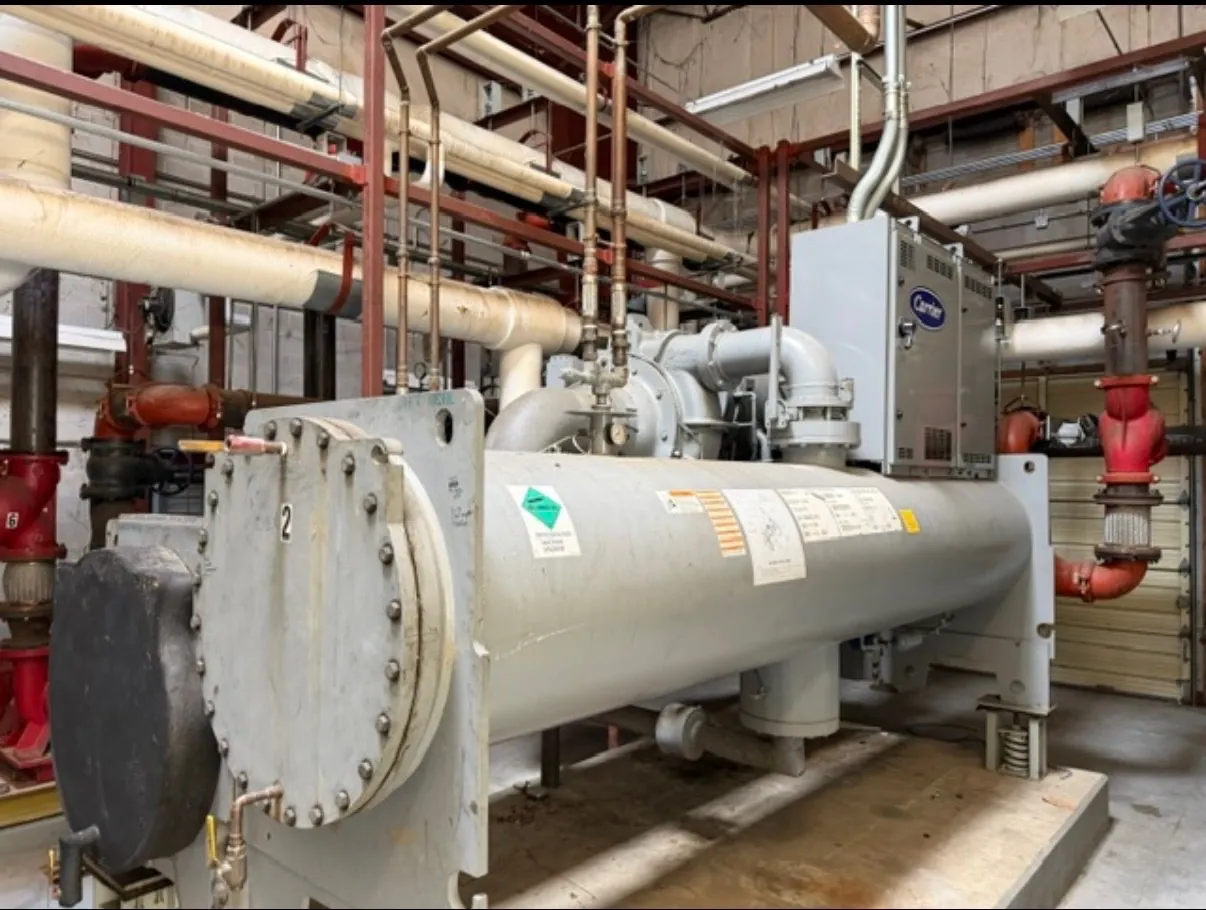
Sell a Surplus Air-Cooled Chiller in Bluffton, SC
We buy used air-cooled chiller equipment in Bluffton and handle the agreed disconnect, rigging, and freight.
We buy chillers. We don’t sell them.
Your chiller.
Our logistics.
Have a surplus or decommissioned chiller? We’re the buyer—here to make moving it straightforward.
From a single unit to equipment from a larger facility, tell us what you have. We buy industrial and commercial chillers across South Carolina and coordinate the work to get them moved.
See how it works
All types & sizes
Air-cooled or water-cooled, centrifugal, screw or scroll. Tell us what you have.
We handle the logistics
We coordinate rigging, refrigerant recovery, loading and freight for the equipment we buy.
Made for sellers
Send the details and nameplate photos to start a conversation about your chiller.
Three steps.
One less chiller.
- 01
Send the details
Share what you know, along with photos of the unit and nameplate.
- 02
Get a quote
We’ll review your equipment and discuss an offer with you.
- 03
Leave the logistics to us
We coordinate removal and freight for the chillers we purchase.
Sell a Surplus Air-Cooled Chiller in Bluffton, SC
If you are comparing ways to sell surplus air-cooled chillers in Bluffton, South Carolina, look beyond the headline price. A useful comparison includes what equipment is covered, who arranges removal, how access will be handled, and what condition information is needed before an offer can be considered. South Carolina Chiller Buyers purchases used chillers directly; we do not sell replacement equipment.
We consider air-cooled chillers of all capacities, including units below 20 tons. A range of 20 to 2,000+ tons is common, but capacity alone does not determine whether a unit is a fit. We consider all brands and refrigerants. Payment is upfront after the purchase terms are agreed, with the offer and removal schedule depending on the equipment and the agreed scope.
Compare the Full Purchase Scope
When reviewing proposals, ask whether the buyer is purchasing the chiller itself and taking responsibility for the removal logistics, or whether the amount assumes that you will arrange some of those tasks. A higher or lower figure can reflect different assumptions about condition, access, equipment included, and the work required to remove and transport it. Compare like with like before deciding.
After an agreed purchase, South Carolina Chiller Buyers handles disconnects, necessary refrigerant recovery through appropriately qualified personnel, crane and rigging, loading, hauling, and freight. Freight is covered. The authorized owner or site representative still needs to approve the sale and coordinate access. This distinction matters: the buyer manages removal, but the site must permit the work and provide a workable access plan.
Describe the Air-Cooled Unit and Its Setting
Air-cooled chillers reject heat through outdoor coils and fans, rather than relying on a conventional cooling-tower loop. For an initial review, record the make and model if available, approximate capacity, visible fan and coil condition, and compressor count where visible. Note whether the chiller is on a roof, a ground-level pad, or a raised frame. Do not open panels or attempt to operate the equipment to gather details.
Photographs can clarify both the unit and its surroundings. Useful views include the overall chiller, visible labels, the coil and fan areas, and the route toward the likely loading point. If the installation is elevated, include the roof or frame context and the area where equipment might need to be positioned. These details help assess removal requirements without asking the seller to dismantle or prepare the chiller.
Capacity Is Not Transport Weight
Tonnage describes cooling capacity; it does not tell a buyer how heavy the chiller is or how difficult it will be to move. Two units with similar nominal capacity may differ in construction, dimensions, refrigerant circuit arrangement, and lifting needs. If manufacturer documentation or a nameplate is available, share it as-is. If weight is not known, say so rather than estimating from capacity.
Likewise, the chiller’s refrigerant is distinct from any process fluid used by the connected system. Do not drain, vent, or disconnect anything to answer a buyer’s questions. Provide information already available in records or labels, and leave any required refrigerant recovery to appropriately qualified personnel as part of the agreed removal.
Access Can Change the Removal Plan
A rooftop or elevated installation may call for a lift plan and a protected ground area. At grade, the route from the chiller to a truck still matters. Share photos showing clearance around the unit, gates, turning space, overhead obstructions, and any changes in level along the route. Mention known access limits, such as restricted work hours or a shared loading area, if they apply.
For example, if a chiller sits on a roof above a narrow service lane, the removal approach may differ from a ground-level unit beside an open vehicle route. That is a conditional planning example, not an assumption about a particular Bluffton property. Access information allows the buyer to evaluate logistics before setting expectations for timing.
Prepare a Clear Offer Request
You do not need to test, start, repair, or prepare your air-cooled chiller to request an offer. A concise request can identify the unit, state whether it is surplus or out of service, summarize known condition, and explain where it sits. Add available photos and any known access constraints. Be clear about what is included in the sale, such as whether the purchase is for the chiller alone or also covers associated items; do not assume connected equipment is included.
- Share visible nameplate details, approximate tonnage, brand, and any known refrigerant information.
- Describe fan and coil condition and compressor count only where visible or documented.
- Note roof, pad, or raised-frame placement and provide route and clearance photos.
- Identify the authorized representative who can approve the sale and coordinate site access.
Set Expectations Before Committing
Once the equipment and access details have been reviewed, confirm the purchase scope, payment terms, responsibilities, and removal arrangements before proceeding. An offer is based on the chiller and the agreed circumstances, and the removal schedule depends on those details; no specific price or date should be assumed in advance. The site representative should make sure access can be authorized and coordinated, while leaving disconnects, recovery, lifting, loading, and transport to the buyer’s arranged team.
For owners in Bluffton considering a surplus air-cooled chiller, the most practical starting point is an accurate description and clear site photos. That gives both sides a better basis for comparing the purchase scope—not just the number attached to an offer.
Ready to move
your chiller?
Tell us what you know. If you’re unsure of a detail, leave it blank. Nameplate photos are a great place to start.

Request a quote.
Fill out what you can and we’ll be in touch.