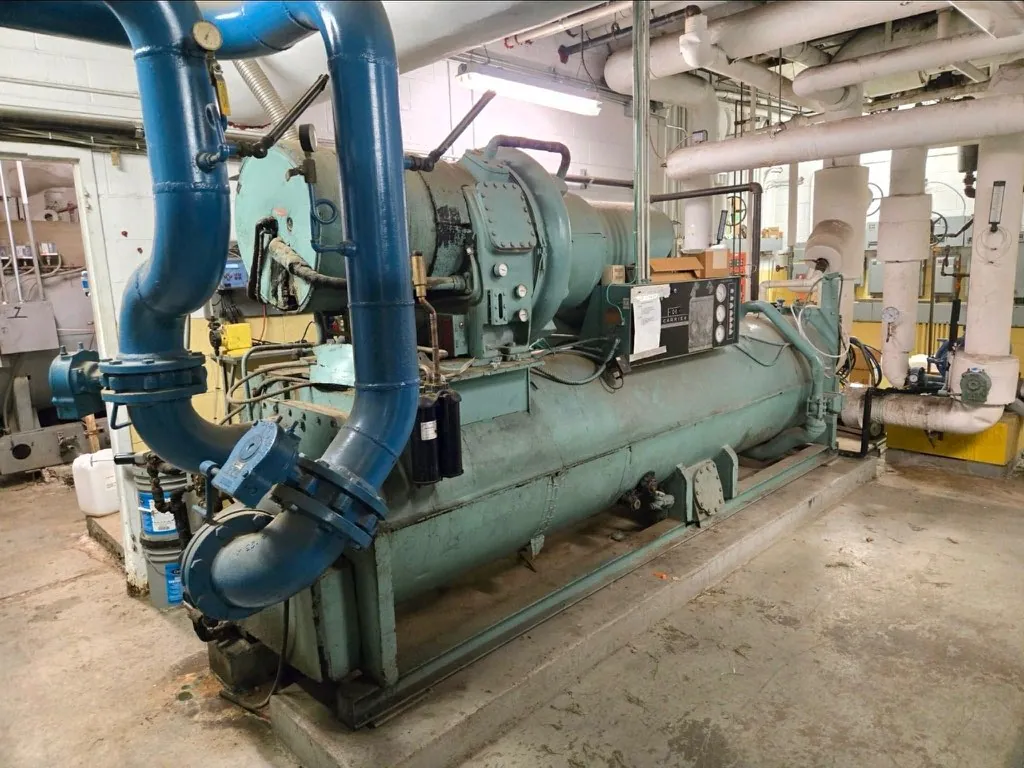
Sell a Used Chiller in Orangeburg County, SC
Sell industrial chiller equipment in Orangeburg County with upfront payment and buyer-managed logistics.
We buy chillers. We don’t sell them.
Your chiller.
Our logistics.
Have a surplus or decommissioned chiller? We’re the buyer—here to make moving it straightforward.
From a single unit to equipment from a larger facility, tell us what you have. We buy industrial and commercial chillers across South Carolina and coordinate the work to get them moved.
See how it works
All types & sizes
Air-cooled or water-cooled, centrifugal, screw or scroll. Tell us what you have.
We handle the logistics
We coordinate rigging, refrigerant recovery, loading and freight for the equipment we buy.
Made for sellers
Send the details and nameplate photos to start a conversation about your chiller.
Three steps.
One less chiller.
- 01
Send the details
Share what you know, along with photos of the unit and nameplate.
- 02
Get a quote
We’ll review your equipment and discuss an offer with you.
- 03
Leave the logistics to us
We coordinate removal and freight for the chillers we purchase.
Sell a Used Chiller in Orangeburg County, SC
South Carolina Chiller Buyers purchases used and surplus chillers throughout Orangeburg County, South Carolina. We are the direct buyer, not a seller of replacement equipment. We consider all tonnages, including machines below 20 tons; 20 to 2,000+ tons is a common range. We also consider all brands and refrigerants. A smaller packaged chiller or a large central plant unit may be worth discussing, depending on its condition, configuration, access and the proposed sale.
To begin, share the municipality or site location and tell us whether your chiller is in a plant, campus, commercial building, data center or another setting. You do not need to test, start, repair or prepare the machine to request an offer. Basic information and clear photos, if safely available without opening or disturbing equipment, can help identify what is being offered.
Define exactly which equipment is for sale
When a chiller is part of a larger installation, the central question is not only which machine is retiring, but where the sale boundary falls. A site may have multiple chillers connected to common piping, controls, pumps, electrical gear or cooling equipment. Those surrounding items may remain in service even when one chiller is surplus. Identify the specific unit being sold and distinguish it from shared equipment that is staying.
For example, if a facility plans to retire one machine from a two-chiller bank, the proposed sale might include only that chiller, while the other unit and common systems remain. In another situation, an entire bank may be available. These are illustrative possibilities, not assumptions about any particular Orangeburg County property. State clearly which arrangement applies, and flag any components whose ownership or status is uncertain.
Information that helps identify the asset
An available nameplate, photographs of the exterior and a brief description of the chiller’s current condition can help distinguish the intended asset from neighboring equipment. If the nameplate cannot be read without accessing a restricted or hazardous area, do not try to reach it; provide what information is already available. Approximate age, known operating history and whether the unit is intact or already disconnected can also help frame the discussion, but no operating test is required.
- Identify the chiller by location, tag number or another existing site identifier.
- Describe whether one unit or a complete group is being offered, and list any included accessories or excluded shared components.
- Share available nameplate details, photos and known condition without opening, energizing or dismantling the equipment.
- Note access conditions and confirm that an authorized owner or site representative can approve the sale and coordinate entry.
Capacity is not the same as removal weight
A chiller’s capacity, often stated in tons, describes its cooling duty; it does not tell a removal crew how heavy the machine is or how it can be moved. Transport planning depends on the actual equipment configuration, dimensions, weight, route out of the building and available access for lifting and loading. Two chillers with similar capacity may require different removal plans. Photos, equipment records and site access information can help assess those practical differences, but the removal approach depends on the specific unit and agreed scope.
Also distinguish the chiller from nearby process or building equipment. A chiller may serve a process loop or building cooling system, but the fluid circulating through that system is not the same thing as refrigerant contained within the chiller. Do not drain, vent, cut or dismantle anything to prepare a unit for sale. Identify what is included and allow qualified personnel to address work that requires specialized handling.
Retirement planning and offer expectations
If a unit is being retired while other equipment continues operating, provide enough context to avoid including assets that must stay connected or remain under site control. If the whole system is being decommissioned, specify whether multiple chillers are available and whether the scope includes only the machines or other identified items. The offer and removal schedule depend on the equipment, the information provided, access conditions and the final agreement. No particular price or pickup date can be promised before those details are reviewed.
Payment is made upfront under the agreed purchase. After a purchase is agreed, South Carolina Chiller Buyers handles disconnects, necessary refrigerant recovery through appropriately qualified personnel, crane and rigging, loading, hauling and freight; freight is covered. The owner or authorized site representative still needs to grant permission and coordinate access. Sellers are not expected to arrange shipping or hire a separate removal crew.
Request an Orangeburg County chiller offer
When contacting us about your chiller in Orangeburg County, explain what is retiring, what remains in place and how the unit can be identified. Mention the site setting, available records or photos, known condition and any access constraints. If the ownership boundary between a chiller and shared equipment is unclear, say so rather than guessing. That gives us a practical starting point for evaluating the proposed purchase and discussing a suitable removal plan without asking you to operate, repair or dismantle the equipment.
Ready to move
your chiller?
Tell us what you know. If you’re unsure of a detail, leave it blank. Nameplate photos are a great place to start.

Request a quote.
Fill out what you can and we’ll be in touch.