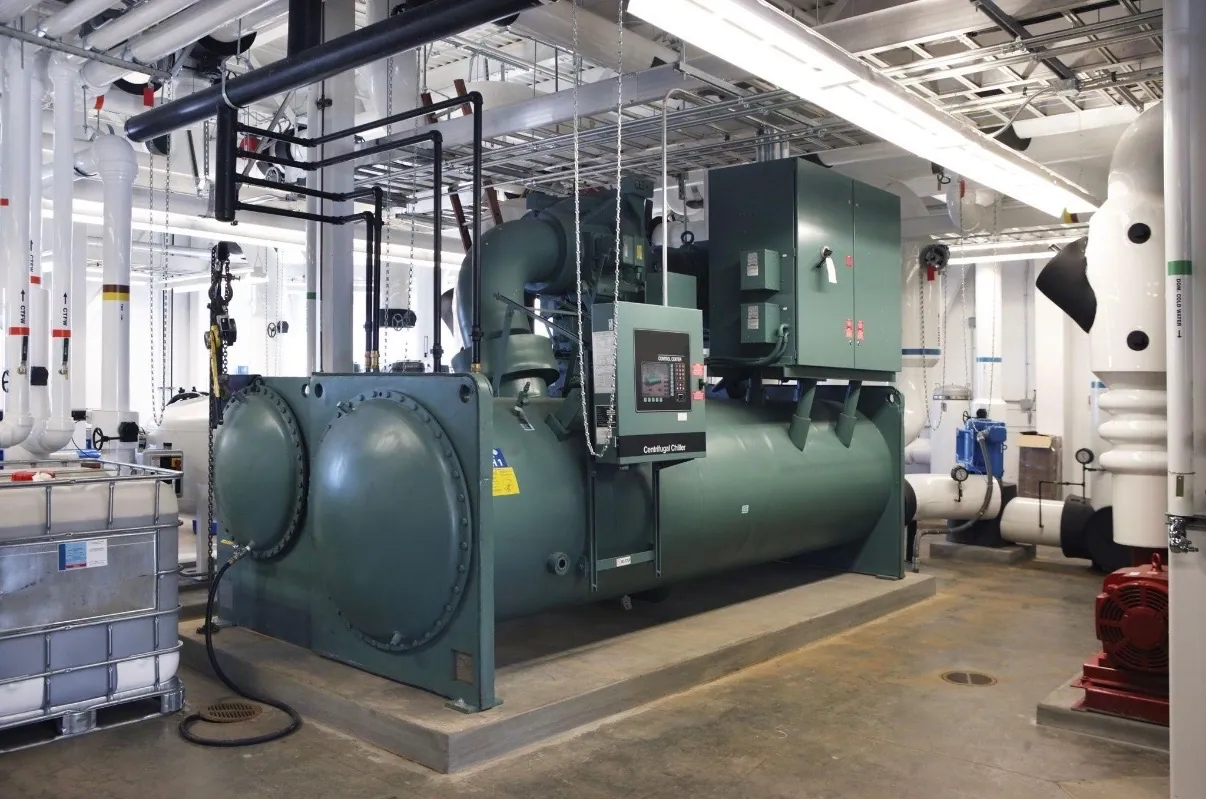
Sell a Used Chiller in Greenville County, SC
Sell industrial chiller equipment in Greenville County with upfront payment and buyer-managed logistics.
We buy chillers. We don’t sell them.
Your chiller.
Our logistics.
Have a surplus or decommissioned chiller? We’re the buyer—here to make moving it straightforward.
From a single unit to equipment from a larger facility, tell us what you have. We buy industrial and commercial chillers across South Carolina and coordinate the work to get them moved.
See how it works
All types & sizes
Air-cooled or water-cooled, centrifugal, screw or scroll. Tell us what you have.
We handle the logistics
We coordinate rigging, refrigerant recovery, loading and freight for the equipment we buy.
Made for sellers
Send the details and nameplate photos to start a conversation about your chiller.
Three steps.
One less chiller.
- 01
Send the details
Share what you know, along with photos of the unit and nameplate.
- 02
Get a quote
We’ll review your equipment and discuss an offer with you.
- 03
Leave the logistics to us
We coordinate removal and freight for the chillers we purchase.
Sell a Used Chiller in Greenville County, SC
South Carolina Chiller Buyers purchases used and surplus chillers in Greenville County, South Carolina. We are a direct buyer, not a seller of replacement equipment. We consider machines of all tonnages, including units below 20 tons; 20 to 2,000+ tons is a common range. We also consider all brands and refrigerants.
To begin, share the municipality or site location and whether the chiller is in a plant, campus, commercial building, data center, or another setting. That context helps clarify what equipment is available and what access arrangements may affect removal. The offer and removal schedule depend on the specific equipment and the terms agreed with the authorized seller; neither a particular price nor a specific date can be promised in advance.
Define exactly what is for sale
If equipment is being retired in Greenville County, identify whether the sale concerns one chiller or an entire bank. In a shared mechanical plant, some units, pumps, piping, controls, or other components may remain in service. A clear description can help distinguish the proposed asset from equipment that must stay.
An available nameplate, photographs of the unit, and a brief account of its known condition are useful starting points. You do not need to test, start, repair, or prepare the chiller to request an offer. Do not energize or open equipment to gather details; use information already available to you and have the site representative clarify what can safely be documented.
Capacity is not transport weight
Chiller capacity, usually stated in tons, describes cooling output; it does not tell a crane operator or hauler how heavy or difficult the machine will be to move. Physical dimensions, configuration, access route, rigging points, and the equipment’s location all matter to a removal plan. A high-capacity unit is not automatically the heaviest, and a smaller chiller can still present access challenges.
For an initial discussion, share any existing equipment records or visible identification details, along with whether the unit is indoors, outdoors, elevated, or in a restricted area. If exact weight or dimensions are not readily available, say so rather than estimating. The buyer can assess what additional information is needed after learning about the asset and site.
Rooftop access needs advance coordination
Consider a conditional example: if a chiller sits on a commercial-building roof, removal may require a crane and a suitable setup area. The site representative would need to confirm permission for the work, coordinate building access, and identify any access restrictions or scheduling requirements. Crane reach, staging space, overhead obstructions, and the route used to load the unit can affect whether a proposed removal plan is practical.
These considerations do not establish that a particular Greenville County property has rooftop equipment or crane access. They illustrate why location details matter. The authorized owner or site representative must approve access and coordinate with the buyer before removal is arranged.
What happens after an agreed purchase
After the purchase terms are agreed, South Carolina Chiller Buyers handles disconnects, necessary refrigerant recovery through appropriately qualified personnel, crane and rigging work when needed, loading, hauling, and freight. Freight is covered. Sellers do not need to hire a carrier or ship the chiller themselves.
Refrigerant is distinct from process fluid: refrigerant circulates within the chiller’s cooling system, while process fluid may serve a separate building or industrial loop. Do not drain, vent, cut, or dismantle the unit. The buyer coordinates the required removal work, while the seller’s authorized representative provides permission and helps arrange access.
Useful details for an initial review
A short, accurate description is more helpful than a speculative condition report. If several units are present, label which one or ones are included and note any visible identification information you already have. These details help keep the proposed sale separate from shared systems or equipment that will remain on site.
- Greenville County municipality or site location
- Number of chillers offered and whether other units remain
- Available nameplate information and existing photographs
- Known condition, without starting or testing the equipment
- General location and access details, including rooftop placement if applicable
- Owner or site representative who can authorize and coordinate access
Discuss the equipment and site together
Whether the chiller is surplus, scheduled for retirement, or no longer needed for its former application, describe the asset and the intended scope of sale. Include any known limits on access or timing so the removal plan can be considered alongside the equipment. South Carolina Chiller Buyers will review the information and discuss an offer and schedule based on the specific machine, site conditions, and agreed terms.
Ready to move
your chiller?
Tell us what you know. If you’re unsure of a detail, leave it blank. Nameplate photos are a great place to start.

Request a quote.
Fill out what you can and we’ll be in touch.